
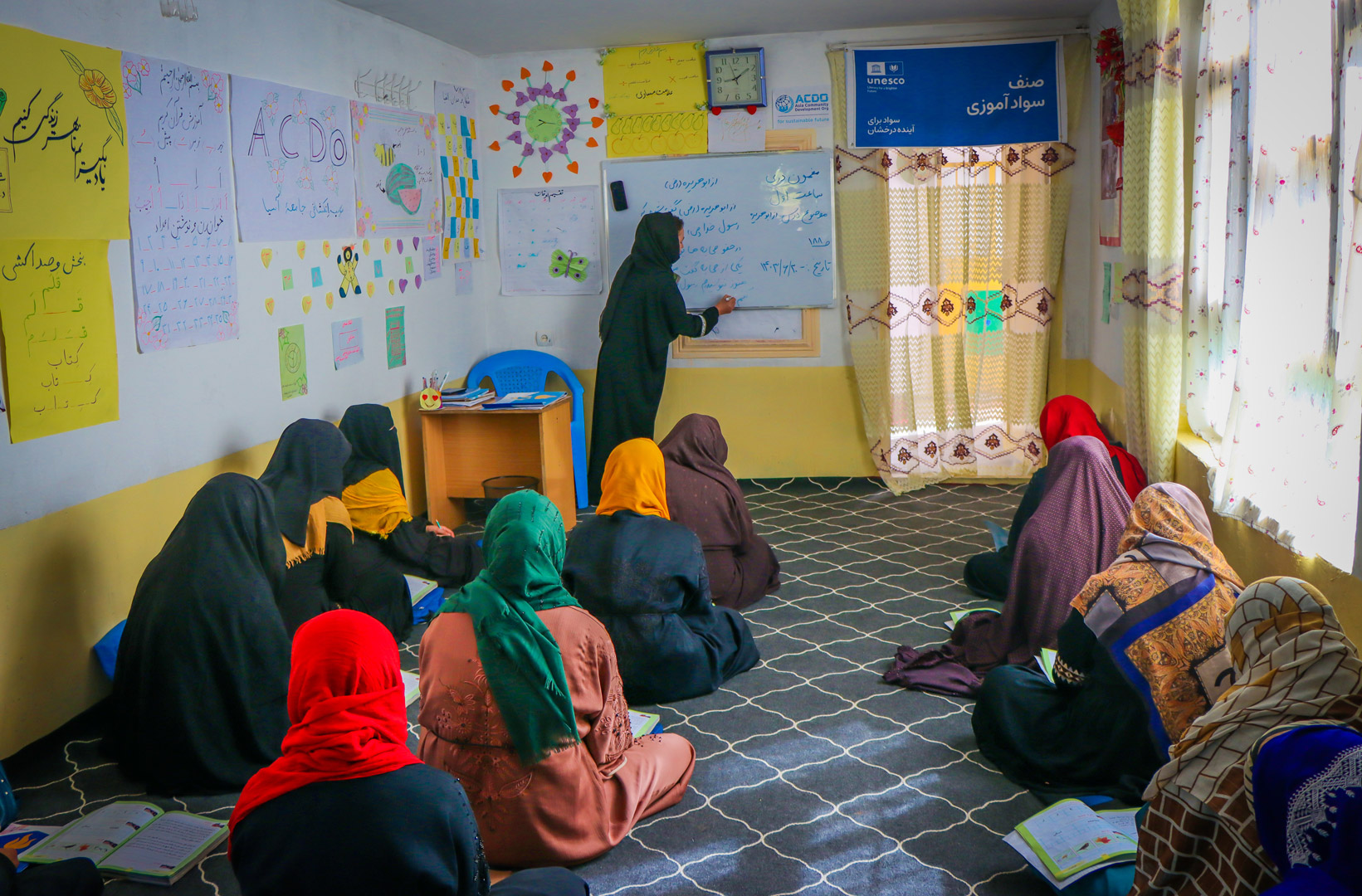
Literacy and numeracy programs in Afghanistan fall under non-formal education and are designed to support youth and adults who lack basic reading, writing, and numeracy skills. These programs primarily target individuals who missed formal schooling opportunities, including women, out-of-school adolescents, and marginalized community members.
The purpose of these initiatives is to expand functional literacy and numeracy, enabling participants to improve their daily lives and actively engage in social and economic activities. Rather than following a traditional school structure, literacy classes are often flexible and community-based, allowing learners to participate according to their circumstances.
These programs focus on:
- Basic reading and writing skills
- Practical numeracy for everyday use
- Life skills and community awareness
Their key role is to enhance employability, promote self-reliance, and strengthen community participation. Improved literacy contributes to better access to information, improved health and financial decision-making, and increased opportunities for livelihoods.
In Afghanistan's current context, non-formal literacy programs remain essential for addressing long-standing education gaps among adolescents and adults who were excluded from the formal system.